


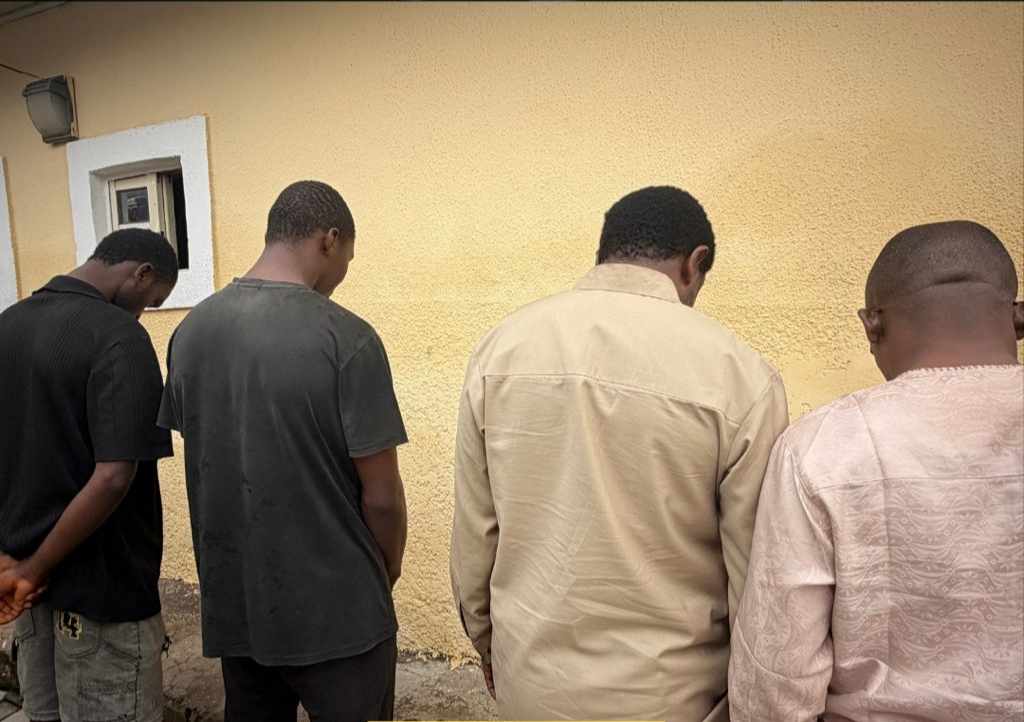
The Nigeria Police Force says it has arrested four people, including two doctors, over an alleged human trafficking and organ-harvesting network operating in Nasarawa State.
The suspects were arrested during a Special Tactical Squad operation in Auta Balifi, Karu Local Government Area, on 19 August, according to the police.
They were paraded in Abuja on Thursday, 27 August.
The police identified the suspects as Emmanuel Ode, 23; Dr Benjamin Oyime, 48, a nephrologist and consultant to Wellington Hospital in Life Camp, Abuja; Dr Daniel Otukpa, 53, also a nephrologist and acting director of clinical services at the hospital; and David Idoko, 25.
The allegations have not been tested in court, and the suspects should be presumed innocent unless proved guilty.
What do police allege?
According to the police, investigators acted on intelligence before carrying out the operation.
They said clothes allegedly bought with proceeds of the suspected crimes were recovered during the operation.
Police said Mr Ode admitted recruiting victims under false pretences.
The police allege that on 24 April 2026, he took a 22-year-old man, identified as Samuel Ezekiel, to Wellington Hospital in Abuja, where his kidney was allegedly removed.
The police say the victim was allegedly paid $1,250, which they valued at about ₦1.7m.
A second alleged victim reportedly told investigators that he had been recruited by the same agent in 2022 and had his kidney removed after being taken to a hospital.
Police said he was allegedly paid ₦7m.
These accounts are allegations contained in the police investigation and have not been independently verified.
The police did not provide medical records, consent forms, hospital records or an independent medical assessment to substantiate the alleged procedures in the statement.
That evidence will be important if the allegations proceed to prosecution.
Alleged exploitation of vulnerable people
Police said the suspects allegedly targeted young and economically vulnerable people in Nasarawa and surrounding areas.
Investigators also allege that official documents were falsified, including National Identification Numbers, birth certificates, age declarations, affidavits and consent letters.
The alleged use of false documentation raises questions beyond the arrests themselves, particularly about how such documents could have been used to facilitate medical procedures and whether any other individuals or institutions were involved.
The police say investigations are continuing and that they are working to identify and arrest other suspects believed to be connected to the alleged network.
Also Read: Nigeria’s Mining Boom: Why Women Are Still Missing From Key Decisions
Why organ trafficking is a serious issue
Organ removal for trafficking is already a criminal offence in Nigeria.
Under the Trafficking in Persons (Prohibition), Enforcement and Administration Act, exploitation includes the removal of organs.
The law provides penalties of at least seven years' imprisonment and a fine for certain offences involving the recruitment or transportation of people for organ removal, as well as offences involving the removal or buying and selling of human organs.
NAPTIP also identifies organ removal or harvesting as one of the forms of exploitation associated with human trafficking.
This means the case is not simply about alleged malpractice in a hospital.
If the police allegations are established, it could involve several offences and potentially a wider network involving recruiters, medical personnel, document providers and beneficiaries.
Nigeria has tightened transplant standards
The case comes as Nigeria's health authorities are trying to strengthen regulation of organ transplantation.
In 2025, the Federal Ministry of Health and Social Welfare introduced national standards and guidelines for establishing and coordinating organ and tissue transplantation services.
The guidelines require voluntary and informed consent and prohibit organ trafficking and commercial dealings in organs.
The ministry has also discussed registering transplant facilities and practitioners and establishing a national organ donation and transplantation registry.
That policy development makes the latest police investigation particularly significant.
The challenge is not only finding alleged traffickers.
Regulators must also ensure that legitimate transplant services have systems capable of detecting coercion, forged documents and suspicious transactions before surgery takes place.
What happens to the hospital?
The police statement names Wellington Hospital in connection with the allegations involving the two doctors.
However, the statement does not say that the hospital itself has been charged or that its management was involved in the alleged offences.
That distinction matters.
Being a doctor or consultant at a hospital does not by itself establish that the institution participated in a crime.
The police will need to establish what each suspect allegedly did, what evidence supports those allegations and whether other individuals or organisations were involved.
The hospital and the two doctors named by police should also have an opportunity to respond to the allegations.
The wider accountability question
The case raises difficult questions about how vulnerable people are recruited, how informed consent is verified and how hospitals and regulators detect illegal organ transactions.
It also highlights the gap between having laws and ensuring they work in practice.
Nigeria already has legislation criminalising trafficking for organ removal, while health authorities have recently strengthened standards governing legitimate transplantation.
The next stage will therefore be crucial.
Investigators will need to establish whether the alleged victims underwent the procedures described, trace any financial transactions, verify the documents said to have been falsified and determine whether the suspects acted alone or as part of a larger network.
For the alleged victims, the priority is likely to be access to medical assessment, protection and appropriate support.
For legitimate transplant patients and medical professionals, effective enforcement matters too: a crackdown that distinguishes illegal trafficking from lawful, properly consented transplantation is essential to maintaining trust in transplant medicine.
The police say efforts are continuing to locate other suspects.
The case now moves from arrest and public allegations to the harder task of producing evidence that can withstand independent scrutiny and, if charges are filed, judicial examination.
OMN

No comments:
Post a Comment